

1. Omega-3: Don’t Just Take It – Know What’s In It
Not all omega-3 is the same. What matters is not only how much “fish oil” is listed on the front of the package, but above all how much EPA and DHA it actually contains. That is exactly why it is worth taking a closer look at the ingredients.
If you already take omega-3, take a closer look at the package. Don’t just compare the amount of fish oil; pay particular attention to the actual amounts of EPA and DHA, the source of the oil, any additional ingredients, and how the delicate oil is protected.
As an example, I’ll show you the omega-3 product I personally chose after doing extensive research of my own. It is the product I use myself and the one I recommend when people ask me about my personal choice. The information below therefore refers to MY product – check your own package and compare.
And don’t worry: Even though I live in the U.S., this product is not only available here, but also in Europe and many other countries.
What should you look for in your omega-3?
QUESTION: How much omega-3 does it actually contain?
MY PRODUCT: At least 600 mg of omega-3 per capsule.
QUESTION: How much DHA and EPA are you getting?
MY PRODUCT: At least 430 mg DHA + 90 mg EPA per capsule. That is a DHA-to-EPA ratio of nearly 5:1.
QUESTION: Where does the fish oil come from?
MY PRODUCT: Fish oil from anchovies, sardines, and mackerel.
QUESTION: How is the delicate oil protected?
MY PRODUCT: Mixed tocopherols plus a special plant oil blend made from oregano, clary sage, thyme, clove, and cinnamon.
QUESTION: Does it contain anything else?
MY PRODUCT: Each capsule also contains 20 µg of vitamin D.
Important: 1,000 mg of fish oil does not automatically mean 1,000 mg of EPA + DHA. Always compare the specific EPA and DHA amounts listed on the label.
2. Which Omega-3 Do I Recommend?
I deliberately chose a DHA-focused omega-3 formula that combines EPA and DHA with vitamin D and an antioxidant plant oil blend.
 View MY omega-3 and the full ingredient information HERE
You can review all the information there yourself and compare it directly with the product you may already have at home.
3. How Do You Know How Well YOU Are Supplied?
Having a well-formulated omega-3 product is one thing. But what also matters is what actually reaches your body. After all, people differ in their diet, lifestyle, and individual nutritional status.
My motto: Measure, don’t guess.
Choose a test, it is very simple, and you don’t need to guess.
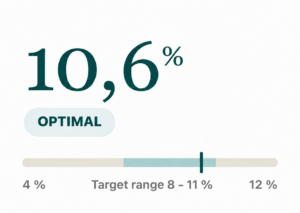
And the whole process is simple: Following the instructions, you take a small blood sample from your fingertip at home and send it directly to the laboratory for analysis. There, your fatty acid profile is analyzed and, among other things, your HS-Omega-3 Index® based on EPA and DHA is determined.
4. When Should You Test?
1. Determine Your Baseline
Ideally, test before starting a new omega-3 routine – or as close to the beginning as possible. This gives you your personal baseline.
2. Be Consistent
Take your chosen omega-3 regularly according to the product directions or an individually tailored recommendation.
3. Test Again
Test again after a few months. To assess changes, a period of about 3–4 months is often recommended; a follow-up test after around 4–6 months is therefore a reasonable timeframe.
5. How the At-Home Test Works
1. Order the test kit to your home.
2. Following the instructions, take a small blood sample from your fingertip.
3. Send the sample to the laboratory.
4. Receive your laboratory results and learn your personal value.
Request the test kit HERE: coming soon
6. Your Results Are In – What’s Next?
If you’d like, we can review your results together. Simply email me at info@ManuelaReimann.com and we’ll arrange an easy WhatsApp chat.
If you then begin taking omega-3 consistently, you can take a second test after about four to six months. This allows you to compare your two laboratory results directly and see whether – and how – your measured omega-3 status has changed.
Don’t assume. Measure.